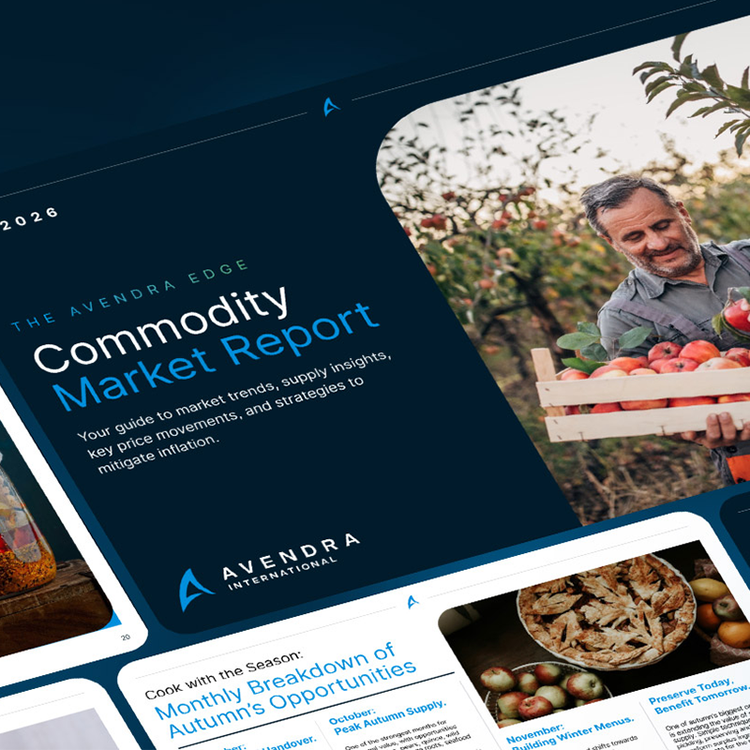
Q3 2026 European Commodity Market Report: Food, energy and supply chain trends
Key takeaways
Weather and energy are driving European commodity costs this quarter, with successive heatwaves and widespread drought affecting crops, dairy and poultry across Europe.
Milk prices have risen sharply, moving above last year's levels as heat begins to reduce yields and tighten supply.
Energy prices are higher, with natural gas leading the increase alongside electricity and crude oil.
Cocoa, coffee, maize and wheat are facing renewed upward pressure as weather concerns affect global and European harvests.
Orange juice, olive oil, salmon and eggs are providing some price relief, creating opportunities for buyers who can adapt sourcing and menus.
Low water levels on the Rhine and Danube are disrupting inland freight, adding cost and uncertainty to European logistics.
What is the Q3 2026 European Commodity Market Report?
The Q3 2026 Continental Europe Commodity Market Report brings together the latest market intelligence across food, beverage and non-food commodities, climate conditions, energy, freight and the wider economic environment.
The report is designed to help hospitality, foodservice and procurement teams understand European commodity prices, what is driving market movements and where costs could come under pressure.
It covers key categories including meat and poultry, seafood, dairy, oils, soft commodities, juices, energy and logistics, combining market data with analysis of the factors influencing prices, supply and availability.
For procurement teams, the focus is not simply on what prices are doing. It is on why they are moving and what businesses can do in response.
This quarter, two themes stand out: weather and energy are becoming major drivers of European food costs, with heat and drought affecting crop yields, livestock productivity and transport capacity.
European commodity prices in Q3 2026: What is changing?
Weather has become a defining factor in European food and commodity markets this quarter.
Successive heatwaves and prolonged drought across Western and Central Europe are reducing yield expectations for key crops, particularly maize and sunflower, while higher irrigation requirements are increasing production costs for growers.
The impact is extending beyond arable crops. High temperatures are reducing milk yields and affecting milk quality in several producing regions, while poultry and meat producers are facing lower efficiency during periods of extreme heat, including significant bird losses reported in France.
At the same time, energy prices have moved sharply higher. Natural gas, electricity and crude oil have all risen as geopolitical tensions in the Middle East increase concerns around energy security and key trade routes.
For hospitality and foodservice operators, this creates a market where availability, supply-chain resilience and weather-related volatility are becoming as important as headline commodity prices.
Which European commodities are rising in price?
Several major food and non-food commodities are experiencing upward pressure in Q3 2026.
Milk and dairy. Milk prices have jumped sharply this quarter, continuing their recovery from exceptionally low levels earlier in the year and moving above where they were this time last year. The market is increasingly being shaped by tightening supply rather than a simple price correction. Heatwaves are beginning to reduce yields and affect milk quality in several regions. Butter and cheese have also firmed as higher milk costs move through the supply chain.
Energy and freight. Natural gas has seen the steepest increase across non-food categories, with electricity and crude oil also climbing as Middle East tensions persist. Container freight from Asia to Europe has risen as well, adding further pressure to imported goods.
Cocoa and coffee. Cocoa has rebounded strongly as weather concerns have returned to the market, with attention shifting to the outlook for the 2026/27 West African crop.
Coffee has also risen significantly, driven by harvest delays in Brazil, low inventories and emerging El Niño risk.
Maize and wheat. Maize and wheat prices have climbed on drought-hit yields, increasing pressure on feed costs across livestock and poultry.
Which European commodities are falling in price?
Not every category is moving higher. Some commodities are providing greater price relief as supply and production conditions improve.
Orange juice is offering the clearest relief as Brazilian production recovers, while olive oil continues to normalise on stronger Mediterranean harvests.
Salmon has eased following earlier tightness, while eggs have softened as market balance improves.
Beef, lamb and chicken have also seen modest quarter-on-quarter easing, although beef and lamb remain expensive by historical standards.
For procurement teams, these differences highlight the value of looking across categories rather than treating overall food inflation as a single trend.
What is driving European food commodity prices?
Weather and drought. Heatwaves and prolonged drought across Europe are putting sustained pressure on agricultural production.
High temperatures, limited rainfall and dry soils are reducing yield expectations for key crops, while increased irrigation requirements are adding costs for farmers. Continued dry conditions could affect harvests further across Western and Central Europe.
Heat stress is also affecting dairy and livestock. Lower milk production, reduced livestock productivity and higher water requirements are creating potential inflationary risks for dairy and protein categories, with poultry particularly exposed during periods of extreme heat.
Water availability is emerging as a strategic resource risk in its own right. Persistent rainfall deficits combined with repeated heatwaves have depleted soil moisture and increased pressure on irrigation systems, affecting crop quality as well as overall yields.
Energy and freight. Energy costs have risen sharply this quarter and continue to underpin transport, refrigeration, processing and distribution throughout the food supply chain.
Natural gas has led the increase, with electricity and crude oil also higher as uncertainty around shipping lanes, regional stability and potential disruption to oil and gas flows keeps markets volatile.
Inland logistics face a separate weather-driven challenge. Extreme heat and drought have reduced water levels on the Rhine and Danube, forcing cargo vessels to carry less and reducing transport capacity on routes that remain important for agricultural products, fuels and industrial goods.
Reduced vessel capacity is increasing inland freight costs and could lengthen delivery times if conditions persist.
Global food supply and trade. Weather disruption is affecting crops beyond Europe. Cocoa, coffee and oilseed markets are particularly sensitive to changing harvest expectations, while improved supply has helped ease pressure in juice, olive oil and seafood categories.
Global food prices have also started to rise again, reaching their highest level in several years as weather and conflict weigh on markets.
Trade policy is adding another layer of uncertainty. Restrictions affecting Brazilian meat imports to the EU from September could tighten poultry supply if implemented, while export restrictions affecting Spanish pork have kept more product within Europe and contributed to a well-supplied market.
How can hospitality and foodservice businesses manage commodity price volatility?
Commodity market intelligence is only part of the picture. The Q3 report also includes seasonal guidance from Avendra International's Head of Culinary, Paul Bloxham, designed to help operators make the most of seasonal availability and keep menus varied and commercially relevant.
Paul highlights autumn and winter produce, from root vegetables, brassicas and seasonal fruit to seafood and game, alongside preserving techniques such as pickling and fermenting that can extend the life of seasonal ingredients.
He also shares a month-by-month view of the season, from September's crossover between summer and autumn to peak supply in October and the shift towards warming winter menus in November.
For procurement and foodservice teams, practical responses to commodity volatility can include:
Monitoring weather-sensitive categories closely
Maintaining sourcing flexibility where possible
Using seasonal ingredients and menu alternatives
Adapting menus around availability and market conditions
Building contingency into purchasing plans for weather-driven supply swings
Working closely with suppliers as conditions change
With changing weather patterns across Europe accelerating seasonal transitions and bringing earlier surpluses and quicker price shifts, staying close to suppliers and adapting menus around what is available is increasingly important.
Download the Q3 2026 Continental Europe Commodity Market Report
The full Q3 2026 Continental Europe Commodity Market Report provides detailed market data, category analysis, seasonal guidance and procurement insights across European food, beverage and non-food commodities.
Use the report to understand the latest European commodity prices, food inflation trends, supply risks and market movements, and identify where there may be opportunities to manage procurement costs.
About the author: Christian Liu Chou
Christian Liu Chou is Supply Chain & Procurement Manager for France & Benelux at Avendra International. With years of experience in hospitality procurement and supplier management, he has a deep understanding of the food and beverage industry across Continental Europe. Christian combines market intelligence with practical, on-the-ground solutions to help operators navigate price volatility and make informed purchasing decisions.
FAQs
What is the European Commodity Market Report?
The European Commodity Market Report is Avendra International's quarterly analysis of food, beverage and non-food commodity markets across Continental Europe. It covers commodity prices, supply conditions, weather, energy, freight and other factors affecting procurement costs.
How does Avendra International track commodity market trends?
Avendra International combines market data, supplier insight and procurement expertise to monitor commodity prices, supply risks and wider market conditions. Its Commodity Market Reports translate these developments into practical insights for hospitality, healthcare,education and foodservice operators.
Who should read the European Commodity Market Report?
The report is designed for procurement teams, chefs and foodservice leaders responsible for purchasing, budget control, menu planning or supply chain management across hotels and hospitality; restaurants, cafés and foodservice; healthcare and care organisations; and schools, colleges and universities.
What is driving European food commodity prices in Q3 2026?
Weather and energy are the two main drivers of European food commodity prices in Q3 2026. Heatwaves and drought are putting pressure on crop yields, dairy and livestock production, while higher energy costs, freight disruption and geopolitical uncertainty are adding further volatility.
Which European food commodities are increasing in price?
Milk, cocoa, coffee, maize and wheat are among the food commodities facing significant upward pressure in Q3 2026. Natural gas, electricity and crude oil have also increased, with weather a common factor behind much of the food-related movement.
We get it, and we can help.
If you need procurement support to help navigate rising costs, get in touch with our expert team: hello_Europe@avendra.com