Q1 2026 food commodity outlook: prices, inflation and supply risks
Key Takeaways
Commodity volatility remained a major cost challenge in Q1 2026, influenced by climate disruption, geopolitical uncertainty, labour pressure and supply chain constraints.
The page notes uneven pressure across categories, making category-level insight more useful for budgeting and menu planning than headline inflation alone.
Practical mitigation includes forecasting with market insight, seasonal menu alignment, supplier transparency, specification reviews, alternative sourcing and better spend visibility.
The report is designed for procurement, finance, culinary and operations decision-makers across catering, hotels, restaurants and multi-site hospitality.
Q1 2026 food commodity outlook for hospitality and catering
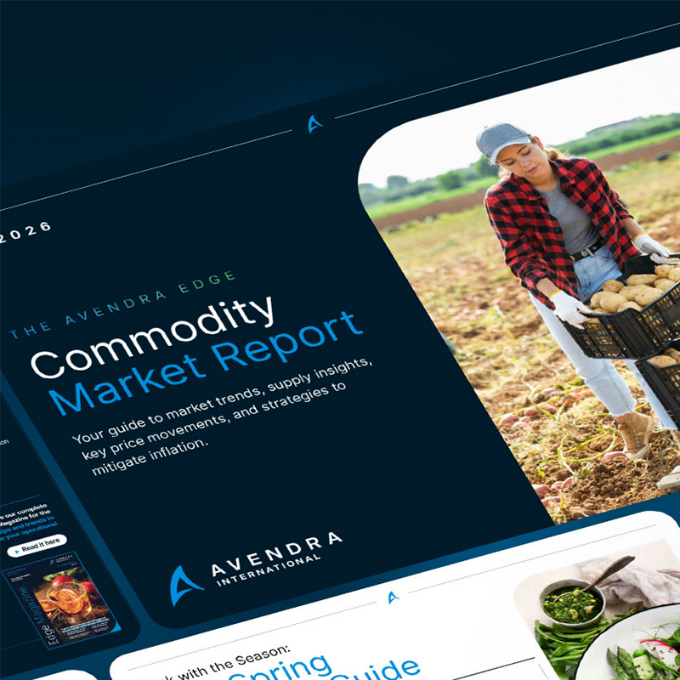
Commodity markets remain volatile in 2026, continuing to put pressure on hospitality and foodservice operating costs. Our Q1 Commodity Report highlights the key trends, price movements, and supply risks shaping key food, beverage and non-food category pricing - with clear insight to help foodservice operators plan ahead and manage inflation.
Q1 2026 food commodity outlook for hospitality and catering
Commodity pricing continues to be one of the biggest cost challenges for catering and hospitality operators in 2026. Climate disruption, geopolitical uncertainty, labour pressures, and supply chain constraints are all influencing food and non-food commodity costs.
Recent geopolitical tensions in the Middle East have also increased uncertainty across global shipping routes and energy markets, adding another layer of volatility to commodity pricing and foodservice supply chains.
For catering, hotel, and restaurant operators, understanding how these factors affect individual categories is essential for budgeting, menu planning, and margin control. High-level inflation headlines rarely tell the full story.
The Q1 2026 Commodity Report provides a clear, practical view of current market conditions. Drawing on independent research, trusted news sources, and the local knowledge of Avendra’s supply chain and culinary experts, it helps foodservice operators make informed decisions with greater confidence.
Q1 2026 commodity prices, inflation and supply chain risks
Commodity markets entered 2026 with continued uncertainty. While some categories have shown signs of stabilisation, volatility remains a key feature across supply chains.
Energy costs, labour availability, weather patterns, currency movement, and geopolitical factors continue to influence pricing and availability.
Although energy inflation in the Eurozone has recently eased due to falling energy prices, ongoing instability in the Middle East means transport and fuel costs remain vulnerable to sudden increases.
Global trade routes also remain sensitive to geopolitical disruption, particularly across Asia–Europe shipping corridors where tensions in the wider Middle East and Red Sea region have increased the risk of shipping delays and longer transit times.
As a result, cost pressure is uneven - with some categories easing and others facing renewed inflation.
This makes category-level insight essential for catering and hospitality teams looking to plan accurately and avoid unnecessary risk.
Food commodity categories under pressure in Q1 2026
In Q1, not all categories face the same level of pressure. Proteins and dairy remain sensitive to feed, energy, and production costs, while fresh produce pricing continues to be influenced by climate conditions and transport costs.
Some ambient categories offer greater stability, although packaging and logistics still affect overall pricing.
Understanding where pressure is building - and where it is easing - allows operators to focus their mitigation efforts where they matter most.
How foodservice operators can mitigate commodity inflation
The Q1 report outlines several practical approaches operators can use to manage food commodity risk more effectively, including:
Using market insight to inform forecasting and budgeting
Aligning menus with seasonal availability and lower-risk categories
Working closely with suppliers to improve transparency
Reviewing specifications and alternative sourcing options
Improving visibility of spend and price movement
The most effective strategies balance cost control with consistency, quality, and guest satisfaction.
Q1 2026 outlook: managing commodity volatility and protecting margins
Commodity volatility will continue to influence catering and hospitality performance throughout 2026. Operators who understand market movement are better placed to manage risk, plan confidently, and protect margins.
The Q1 Commodity Report brings together market trends, supply insight, key price movements, and practical guidance tailored to catering and hospitality operators.
Download the Q1 2026 Commodity Market Report
Download the full Q1 Commodity Report to access detailed analysis and expert insight to support smarter purchasing and menu decisions.
Procurement support for food price and supply chain volatility
If you need procurement support to help navigate rising costs, get in touch with our expert team: hello_UK@avendra.com
FAQs
What is driving food commodity price volatility in Q1 2026?
The article identifies climate disruption, geopolitical uncertainty, labour pressures, energy and transport exposure, currency movement and supply chain constraints as important influences on food and non-food commodity pricing.
Which food commodity categories are under the most pressure in Q1 2026?
The report notes that pressure is uneven: proteins and dairy remain sensitive to feed, energy and production costs, while fresh produce is affected by climate and transport conditions. Some ambient categories are comparatively more stable.
How can hospitality and catering operators mitigate food inflation?
Practical steps include using market insight for forecasting, aligning menus with seasonal availability, improving supplier transparency, reviewing specifications and sourcing alternatives, and increasing visibility of spend and price movement.
How can Avendra International help operators manage commodity risk?
Avendra International provides procurement expertise, supply chain insight and culinary guidance that can help operators interpret market conditions and make more informed purchasing and menu decisions.
How can eProcurement improve visibility of food cost changes?
An eProcurement can centralise purchasing and pricing information, making it easier to monitor spend and supplier activity. Avendra International’s Pi eProcurement system is designed to improve procurement visibility and reduce manual administration.