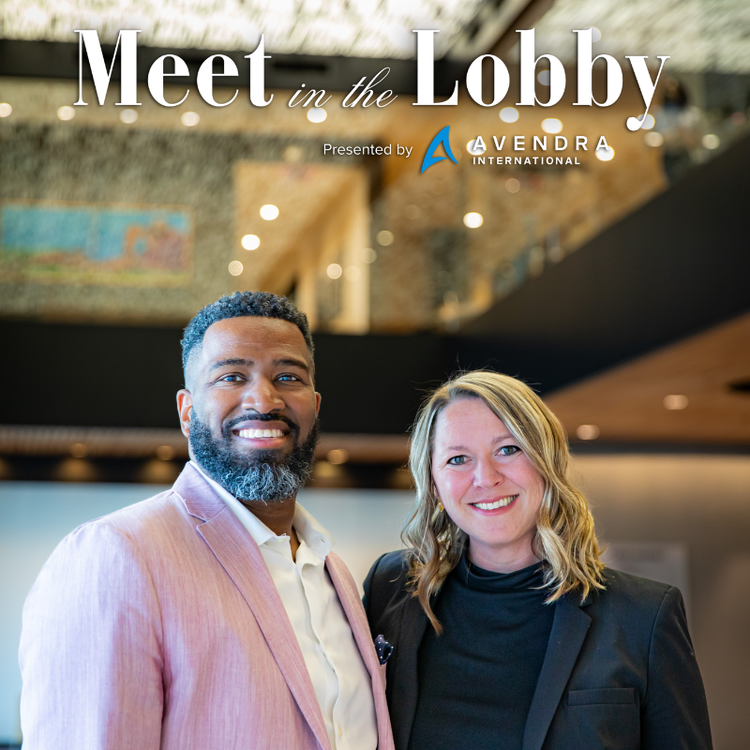
The Future of Procurement Leadership: Why Context, Curiosity, and Kindness Matter | “Meet in the Lobby” from Avendra International
Key Takeaways for Hotel Operators:
- Strong procurement leadership starts with understanding real operational environments.
- The next generation of talent is purpose-driven, tech-savvy, and motivated by impact and growth.
- The biggest gap in today’s workforce isn’t capability—it’s context—and leaders must actively share experience to bridge it.
- Future procurement leaders must act as translators between data, strategy, and on-the-ground operations.
- Empathy, systems thinking, and influence will define successful procurement leadership.

In this episode of Meet in the Lobby, hosts Dorien Murphy and Melissa McCormack continue their conversation with Molly Preston, Senior Vice President of Procurement at Pyramid Global Hospitality, a valued Avendra client.
This time, the focus shifts from global procurement strategy to something just as critical: leadership, talent development, and the future of the procurement function.
At the center of the discussion is a powerful idea:
Procurement leadership is about designing systems, empowering people, and translating strategy into reality.
Designing for Reality Instead of the Boardroom
For Molly, effective leadership begins with a simple, often overlooked principle:
“If a process looks good in the boardroom but fails at 6AM during the breakfast rush, it’s broken.”
That mindset reflects a deep respect for the realities of hotel operations—where timing, pressure, and guest expectations collide in real time.
Her approach is grounded in two leadership “north stars”:
- Understand the operator’s day before designing solutions
- Lead with kindness and curiosity, not criticism
Why it matters:
Hospitality is an operational business at its core. Strategies that don’t translate to real-world execution create friction.
By designing systems that work in the moments that matter most, procurement leaders can drive adoption, consistency, and long-term success.
Understanding the Next Generation of Hospitality Leaders
As new generations enter the workforce, leadership styles must evolve alongside them.
According to Molly, today’s emerging talent is:
- Highly purpose-driven
- Naturally tech-savvy
- Comfortable challenging the status quo
And perhaps most notably—they constantly ask “why.”
Rather than viewing this as a challenge, Molly sees it as an opportunity.
Why it matters:
That curiosity fuels innovation. When teams question existing processes, they create space for better ones.
At the same time, organizations must rethink how they engage and develop talent.
“They’re not less committed—they’re just differently motivated.”
Today’s workforce is seeking:
- Clear impact
- Faster growth
- A strong sense of belonging
Leaders who can clearly answer one question—“Does my work matter?”—will unlock deeper engagement and performance.
The Real Gap: Context, Not Capability
Despite generational differences, Molly challenges a common misconception:
The issue isn’t a lack of skill—it’s a lack of lived business context.
Many emerging professionals haven’t experienced:
- Economic downturns
- Supply chain disruptions
- Sustained margin pressure
These moments shape decision-making in ways that can’t be taught through systems alone.
The responsibility, then, falls on today’s leaders.
Instead of gatekeeping knowledge, they must:
- Share experiences openly
- Provide real-world context
- Accelerate learning through mentorship
Why it matters:
When organizations actively transfer knowledge, they shorten the learning curve—and unlock faster innovation.
The alternative? Slower growth, repeated mistakes, and missed opportunities.
Procurement Leaders as Strategic Translators
As hospitality becomes more global and more data-driven, the role of procurement is evolving rapidly.
Molly describes the next generation of procurement leaders as “translators.”
They sit at the intersection of:
- Data and decision-making
- Global strategy and local execution
- Corporate goals and operational realities
Success in this role requires more than technical expertise. It demands:
- Systems thinking
- Empathy for operators
- Comfort with ambiguity
- The ability to influence without authority
“Procurement leaders won’t succeed by controlling decisions—they’ll succeed by designing systems that guide better ones.”
Why it matters:
This shift moves procurement from a reactive function to a proactive force—one that shapes outcomes rather than simply managing them.
From Firefighting to Architecture
One of the most compelling themes in the discussion is the shift from reactive problem-solving to proactive design.
Instead of constantly “putting out fires,” procurement leaders have the opportunity to become architects—building frameworks that prevent problems before they arise.
These frameworks can:
- Guide decision-making at scale
- Align corporate strategy with property-level execution
- Reduce operational friction
- Empower teams to act with confidence
The result?
Less time spent reacting—and more time focused on innovation, growth, and the guest experience.
Leading with Empathy—and Impact
At its core, this conversation reinforces a powerful truth:
Hospitality is, and always will be, a people business.
Whether it’s designing systems for operators, mentoring the next generation, or shaping global strategy—successful procurement leadership depends on human connection.
Leading with empathy, sharing knowledge openly, and creating space for curiosity aren’t just “nice-to-haves”—they’re competitive advantages.
What’s Next?
As procurement continues to evolve, one thing is clear:
The future belongs to leaders who can combine operational understanding, strategic thinking, and a people-first mindset.
Ready to explore the fascinating world of hospitality through the lens of experts who've lived it? Tune in to “Meet in the Lobby,” subscribe for future episodes, and engage in conversation over on our LinkedIn.
Check out “Meet in the Lobby” on YouTube, Spotify, and Apple Podcasts.
We get it, and we can help.
THE FUTURE OF PROCUREMENT LEADERSHIP: WHY CONTEXT, CURIOSITY, AND KINDNESS MATTER
FAQs