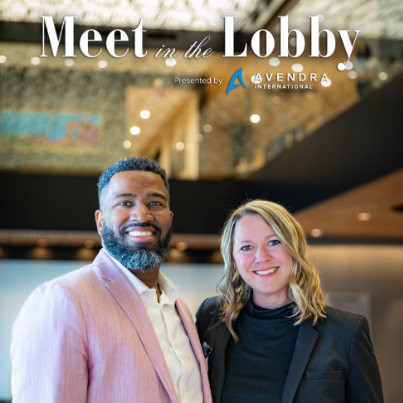
How to Prevent Burnout and Retain Talent in Hospitality | “Meet in the Lobby” from Avendra International
Key Takeaways for Hotel Opreators
- Burnout is often a leadership and systems challenge—not simply an individual issue.
- Consistent one-on-one conversations help leaders identify challenges before they become retention problems.
- Employees want to be seen as whole people, not just team members filling shifts.
- Strong cultures reduce turnover by creating connection, purpose, and accountability.
- Sustainable leadership requires curiosity, adaptability, and a willingness to embrace new tools like AI.
- The future of hospitality belongs to leaders who invest in both operational excellence and human connection.
In this episode of Meet in the Lobby, hosts Dorien Murphy and Melissa McCormack welcome back Christin Marvin, Founder of Columbine Hospitality, author of “Multi-Unit Mastery: How to Simplify Operations, Maximize Profits and Lead with Confidence,” board member of CHOW, and hospitality leadership coach, for a candid discussion about one of the industry's most pressing challenges: burnout.
While hospitality has long worn resilience as a badge of honor, today's leaders are increasingly recognizing that constant pressure, long hours, and reactive management are not sustainable business strategies.
Drawing on her experience coaching operators and leadership teams, Marvin shares practical insights on creating healthier workplaces, developing stronger leaders, and building organizations that can thrive without exhausting the people who power them.
At the center of the conversation is a powerful idea:
Sustainable hospitality leadership is built on connection, communication, and culture—not constant sacrifice.
The First Line of Defense Against Burnout: Connection
When discussing burnout, Marvin points to a surprisingly simple but often overlooked leadership practice: regular conversations.
For many hospitality operators, the day-to-day demands of running a business can push employee development and relationship-building to the sidelines. But Marvin argues that meaningful one-on-one conversations are among the most effective tools leaders have.
"It's about connection. It's about staying present for your people and checking in on them."
Her recommendation is straightforward: create dedicated time for fifteen- to thirty-minute conversations that focus not only on professional performance, but also on personal well-being.
The goal isn't simply to discuss operational tasks. It's to understand how employees are feeling, what challenges they're experiencing, and what support they may need.
Why it matters:
Employees who feel seen and valued are more likely to communicate concerns before they become crises. Strong relationships create trust, and trust creates the foundation for healthier, more resilient teams.
Seeing the Whole Person
Throughout the conversation, both hosts and Marvin return to a universal truth within hospitality: people want to be recognized.
Whether it's a guest returning to a favorite restaurant or an employee showing up for another demanding shift, the desire to feel seen and appreciated remains the same.
Historically, many hospitality professionals were taught to leave personal issues at the door. Marvin herself was raised in that culture.
"I was brought up in the industry with the mentality of leave your stuff at the door and come in and be professional."
Over time, however, she discovered that approach can create unintended consequences. Leaders who never show vulnerability or acknowledge challenges may unintentionally weaken trust with their teams.
Employees often recognize when leaders are struggling. Pretending otherwise can create distance rather than confidence.
Why it matters:
Authentic leadership doesn't require oversharing, but it does require honesty. When leaders acknowledge challenges and create space for open conversation, they foster stronger relationships and healthier workplace cultures.
Burnout Is Often a Systems Problem
One of the most compelling themes of the episode is the idea that burnout rarely happens in isolation.
Rather than viewing burnout solely as a personal issue, Marvin encourages operators to examine the systems and structures surrounding their teams.
That starts with paying attention.
Leaders should be actively observing:
- Workload and scheduling practices
- Energy levels among team members
- Changes in behavior or attitude
- Performance consistency
- Team interactions and communication
Small signals often reveal larger problems.
A server who once approached challenges with enthusiasm but now responds with indifference may be showing early signs of exhaustion. A team member who was once highly engaged may be struggling with workload, personal challenges, or lack of support.
Why it matters:
Burnout is easier to prevent than to repair. Leaders who regularly assess team health can intervene early, protecting both employee well-being and business performance.
Looking Beyond Staffing Shortages
Hospitality leaders frequently face a difficult reality: there isn't always another person available to cover the shift.
When staffing challenges arise, owners and managers often step into front-line roles themselves. While this approach may solve an immediate problem, Marvin warns that it is rarely sustainable.
Too often, operators become trapped in a cycle of constant intervention.
Instead of repeatedly covering gaps, leaders should investigate the root cause.
Questions worth asking include:
- Are we hiring the right people?
- Have we communicated expectations clearly?
- Are team members connected to our culture and values?
- Are scheduling practices contributing to absenteeism?
- Do employees understand the importance of their role in the organization's success?
According to Marvin, strong cultures dramatically reduce many of the staffing issues operators commonly face.
"If I don't feel like what I'm doing matters, or I'm not connected to the core values or purpose, when something gets challenging, I'm one foot out the door."
Why it matters:
Staffing challenges are often symptoms of larger cultural issues. Organizations that build trust, accountability, and purpose are better positioned to retain talent and reduce disruption.
Curiosity: The Leadership Skill That Never Goes Out of Style
As the hospitality industry continues to evolve, Marvin believes one leadership trait will remain essential: curiosity.
The most effective leaders continually ask questions.
They're curious about:
- What's working well
- What can be improved
- How guest expectations are changing
- How employee needs are evolving
- How technology can create efficiencies
Rather than accepting the status quo, curious leaders actively seek opportunities to improve both the business and the employee experience.
This mindset becomes increasingly important as operators navigate economic pressures, labor challenges, and changing consumer expectations.
Why it matters:
Curiosity drives innovation, continuous improvement, and long-term adaptability—qualities every hospitality business needs to remain competitive.
AI as a Leadership Tool, Not a Replacement
Looking toward the future, Marvin also highlights the growing role of artificial intelligence within hospitality operations.
While AI is frequently discussed in terms of automation, she sees another, equally valuable opportunity: giving leaders time back.
By helping streamline systems, processes, and administrative work, AI can reduce operational burdens and allow leaders to focus on the work that matters most.
That means spending more time:
- Coaching employees
- Developing future leaders
- Connecting with guests
- Strengthening culture
- Building long-term strategy
"Use AI as a thinking partner."
For Marvin, technology should enhance leadership—not replace it.
Why it matters:
The organizations that balance technological efficiency with human connection will be best positioned for sustainable growth in the years ahead.
What’s Next?
If there was one consistent message throughout the conversation, it was this:
Burnout is not an inevitable cost of hospitality success.
The industry's future will belong to leaders who build cultures of trust, create systems that support their teams, and remain curious enough to continuously adapt.
From meaningful one-on-one conversations to stronger workplace cultures and smarter use of technology, the path forward is clear: sustainable leadership begins with investing in people.
Ready to explore the fascinating world of hospitality through the lens of experts who've lived it? Tune in to “Meet in the Lobby,” subscribe for future episodes, and engage in conversation over on our LinkedIn.
Check out “Meet in the Lobby” on YouTube, Spotify, and Apple Podcasts.
We get it, and we can help.
How To Prevent Burnout and Retain Talent in Hospitality
FAQs