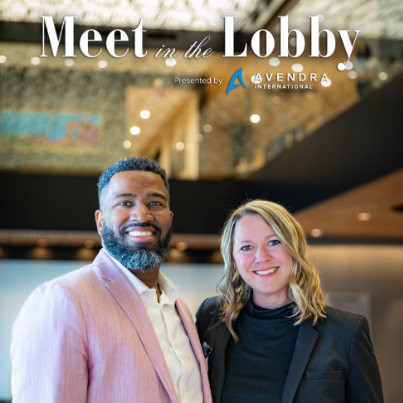
Smart Cost Cutting Without Sacrificing Guest Experience | “Meet in the Lobby” from Avendra International
Key Takeaways for Hospitality Operators
- Hotel operators can reduce costs quickly by reviewing service contracts, consolidating vendors, and leveraging strategic procurement partnerships.
- Menu engineering helps restaurants improve profitability through seasonal sourcing, menu optimization, strategic pricing, and reduced food waste.
- Personalized guest interactions can drive additional food and beverage revenue without compromising the guest experience.
In this episode of Meet in the Lobby, hosts Dorien Murphy, Director of Luxury Accounts, Avendra International, and Melissa McCormack, Senior Director of Field Support & Customer Relations, Avendra International, tackle some of the most common questions they're hearing from hospitality operators today: How can hotels reduce costs without compromising service? Where are the biggest opportunities to improve profitability? And what strategies are delivering results right now?
Drawing from their hospitality expertise and conversations with owners, management companies, finance leaders, and property teams, Murphy and McCormack share practical insights on procurement, contract management, food and beverage operations, and revenue generation. From uncovering savings hidden in service agreements to optimizing menus and creating personalized guest experiences, the discussion focuses on actionable strategies that operators can implement today.
At the center of the conversation is a simple but important idea:
The most effective cost-saving strategies aren't about cutting corners. They're about making smarter decisions that protect margins while enhancing the guest experience.
Q: What are some of the simplest, highest-impact changes hospitality operators can make right now to reduce costs?
Dorien Murphy: “One of the first places I tell operators to look is their service contracts.
These are often large, recurring expenses that hotels are already paying for, including elevator maintenance, landscaping, uniform programs, and other critical services. Even a modest percentage reduction can have a significant impact when you're talking about five- or six-figure annual contracts.
For operators working with a procurement partner like Avendra, there may already be negotiated savings opportunities available. The question becomes: are you taking advantage of them?
Another area I think hotels often overlook is collaboration across properties. Too many portfolios are operating in silos, with different hotels using different vendors for the same services.
When hotel groups consolidate spend across multiple properties, they can often improve pricing, simplify operations, and strengthen vendor accountability.”
Melissa McCormack: “I couldn't agree more. We recently worked with a client who saved nearly $75,000 annually simply by changing laundry providers. That's a meaningful savings opportunity that didn't require a renovation or a major operational change.
I also encourage operators to look carefully at the structure of their contracts. Sometimes it's not just about getting a lower price. Performance-based clauses can create additional value by ensuring vendors are meeting agreed-upon service expectations.”
DM: “That's such an important point.
Too often we focus exclusively on invoice pricing, but the best contracts create value in multiple ways. There may be opportunities for rebates, marketing funds, incentives, or other financial benefits that improve the overall relationship.
At the end of the day, great contracts should work for both sides.”
Q: When it comes to food and beverage, how can operators elevate their menus without significantly increasing costs?
MM: “This is where I get on my soapbox because I'm incredibly passionate about it.
For me, it starts with menu engineering.
Operators should constantly be looking at ways to maximize profitability while delivering a great guest experience. That includes utilizing seasonal ingredients, cross-utilizing products across multiple menu items, monitoring commodity trends, and regularly evaluating what's selling and what isn't.
One mistake I see frequently is menus becoming stagnant.
Food costs change. Guest preferences change. Menus should evolve too.
And don't underestimate the value of specials. Roughly 15% to 20% of guests will order a featured special, which creates a tremendous opportunity to drive profitability if those offerings are designed strategically.
DM: “I think that's one of the most important takeaways.
Sometimes chefs and operators become emotionally attached to menu items that simply aren't performing. If something isn't selling and isn't contributing to profitability, it's worth asking whether it still deserves a place on the menu.
I also believe many restaurants make things harder than they need to be.
Guests don't always want pages and pages of choices. In many cases, a focused menu featuring your strongest dishes will create a better experience and a healthier bottom line.”
Q: Are there simple menu design changes that can improve profitability?
MM: “Menu design is one of those things guests don't consciously notice, but it has a huge impact on purchasing behavior.
For example, studies show that on a two-page menu, guests often look at the top-right corner first. If it's a single-page menu, their attention is usually drawn toward the center.
Those are prime opportunities to showcase your most profitable items.
Another tactic is removing currency symbols from pricing.
There's a psychological difference between seeing "$32" and simply seeing "32." Without the dollar sign, guests tend to focus more on the item itself and less on the price.”
DM: “That was one of the most interesting things I learned from this conversation.
As someone who's spent a lot of time around food and beverage operations, I hadn't fully appreciated how impactful those small design choices can be.
The other point that stood out to me is decision fatigue.
The more options you give people, the harder it becomes to choose. Sometimes simplifying a menu can improve both the guest experience and overall profitability.”
Q: Beyond menu design, what are some effective ways to generate additional food and beverage revenue?
DM: “One of my favorite examples actually came from a recent hotel stay.
I was checking into a property before speaking at a finance summit. The front desk agent completed the check-in process and casually asked whether I planned on having an Old Fashioned that evening.
At the time, I wasn't planning on it.
At least I didn't think I was.
But later that night, I found myself stopping by the hotel bar, ordering an Old Fashioned, and taking it back to my room while preparing for the next day's presentation.
What struck me was how seamless it felt. It wasn't a sales pitch. It was simply a personalized recommendation.
That's revenue generation at its finest.”
MM: “I love that story because it highlights something we talk about all the time.
Hotels are an ecosystem.
Revenue generation doesn't begin when a guest walks into a restaurant. Every touchpoint plays a role, from reservations and check-in to concierge interactions and room communications.
When teams are aligned and focused on the guest experience, those opportunities happen naturally.”
Q: What's the most memorable cost-saving tactic you've seen an operator try?
DM: “Years ago, I worked at a hotel that was preparing for a large banquet event when disaster struck.
A banquet server accidentally knocked over an entire tower of coffee mugs. Hundreds shattered.
We immediately needed replacements, but there was one problem: our supplier was based in China, and we were approaching Chinese New Year, so production was slowing down.
Instead of waiting, we sourced a similar product from a supplier in Australia. What started as a temporary solution eventually became our long-term solution because the pricing and service were surprisingly strong.
It wasn't part of the plan, but it worked.
MM: “That story perfectly captures the hospitality spirit.
Whether it's supply chain disruptions, staffing challenges, or unexpected operational issues, hospitality professionals are constantly finding creative ways to solve problems.
It's what makes our industry special.”
DM: “Exactly. Only in hospitality can a crisis involving hundreds of broken coffee mugs turn into a long-term procurement success story.”
Ready to explore the fascinating world of hospitality through the lens of experts who've lived it? Tune in to “Meet in the Lobby,” subscribe for future episodes, and engage in conversation over on our LinkedIn.
Check out “Meet in the Lobby” on YouTube, Spotify, and Apple Podcasts.
We get it, and we can help.
SMART COST CUTTING WITHOUT SACRIFICING GUEST EXPERIENCE | “MEET IN THE LOBBY” FROM AVENDRA INTERNATIONAL
FAQs